Choosing the right rug size can make or break a room's design. A rug that's too small makes furniture look disconnected, while one that's too large overwhelms the space. This guide walks you through selecting the perfect rug dimensions for every room in your home.
Why Rug Size Matters
A properly sized rug anchors your furniture, defines the space, and creates visual harmony. It's the foundation of your room's layout — get it right and everything else falls into place. Get it wrong and the room will feel off, even if you can't pinpoint why.
Living Room Rug Sizing
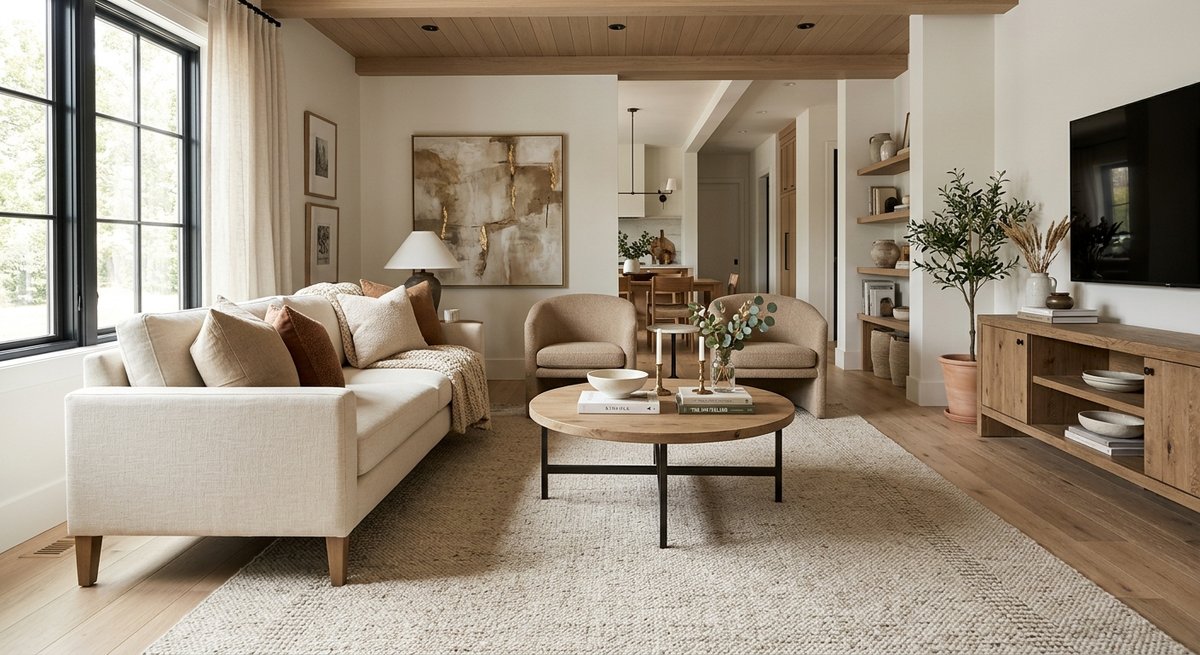
The living room is where most people struggle with rug size. The key rule: your rug should be large enough to anchor your seating arrangement.
The Front-Leg Rule
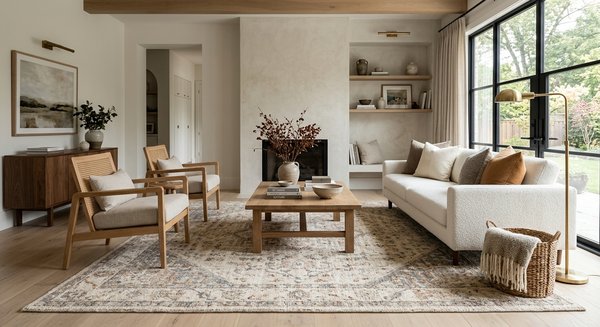
At minimum, the front legs of your sofa and chairs should sit on the rug. This creates a connected conversation area. For a standard 7-foot sofa, you'll need at least a 5' x 8' rug.
The All-Legs Rule
For a more luxurious look, place all furniture legs on the rug. This requires a larger rug — typically 8' x 10' or 9' x 12' for a standard living room set. The extra rug visible around the furniture creates a sense of abundance.
Living Room Size Guide
- Small living room (under 12' x 12'): 5' x 7' or 5' x 8' rug
- Medium living room (12' x 15'): 8' x 10' rug
- Large living room (15' x 18'+): 9' x 12' or larger
Bedroom Rug Sizing
In the bedroom, the rug should extend beyond the sides and foot of the bed to provide a soft landing when you step out.
Under a Queen Bed
For a queen-size bed (60" x 80"), use an 8' x 10' rug. Position it so 18-24 inches of rug extends beyond each side and the foot of the bed. Alternatively, place a 5' x 8' rug at the foot of the bed, perpendicular.
Under a King Bed
For a king-size bed (76" x 80"), use a 9' x 12' rug. The rug should extend at least 18 inches beyond the sides of the bed.
Runner Along the Bed
A 2' x 7' or 3' x 5' runner placed alongside the bed provides a warm landing spot without the cost of a full-size rug.
Dining Room Rug Sizing
The golden rule for dining room rugs: the rug should extend at least 24 inches beyond the table on all sides. This ensures chairs stay on the rug even when pushed back.
- 4-person table (48" round): 8' round or 8' x 10' rectangular
- 6-person table (60" x 36"): 8' x 10' or 9' x 12'
- 8-person table (72" x 36"): 9' x 12' minimum
Entryway Rug Sizing
Entryway rugs set the tone for your home. Choose a size that fits the space without crowding it.
- Small entry: 2' x 3' or 3' x 5'
- Medium entry: 4' x 6'
- Large foyer: 5' x 8' or round 6' rug
- Hallway runner: 2' x 6', 2' x 8', or 2' x 10' depending on length
General Sizing Tips
- Leave 12-18 inches of floor visible: Don't cover the entire floor — leave a border of bare floor around the rug
- Measure first: Always measure your room and furniture before buying
- Use painter's tape: Mark the rug area on the floor with painter's tape to visualize the size before purchasing
- Layer carefully: If layering a smaller rug over a larger one, ensure both are proportional to the space
- Consider door clearance: Make sure doors can open over the rug without catching
Conclusion
The right rug size transforms a room from disjointed to cohesive. Measure your space, consider your furniture layout, and choose a rug that anchors the seating area. When in doubt, go larger — a bigger rug creates a more luxurious, connected feel. Use this guide as a starting point, but trust your eye and your room's proportions to make the final call.