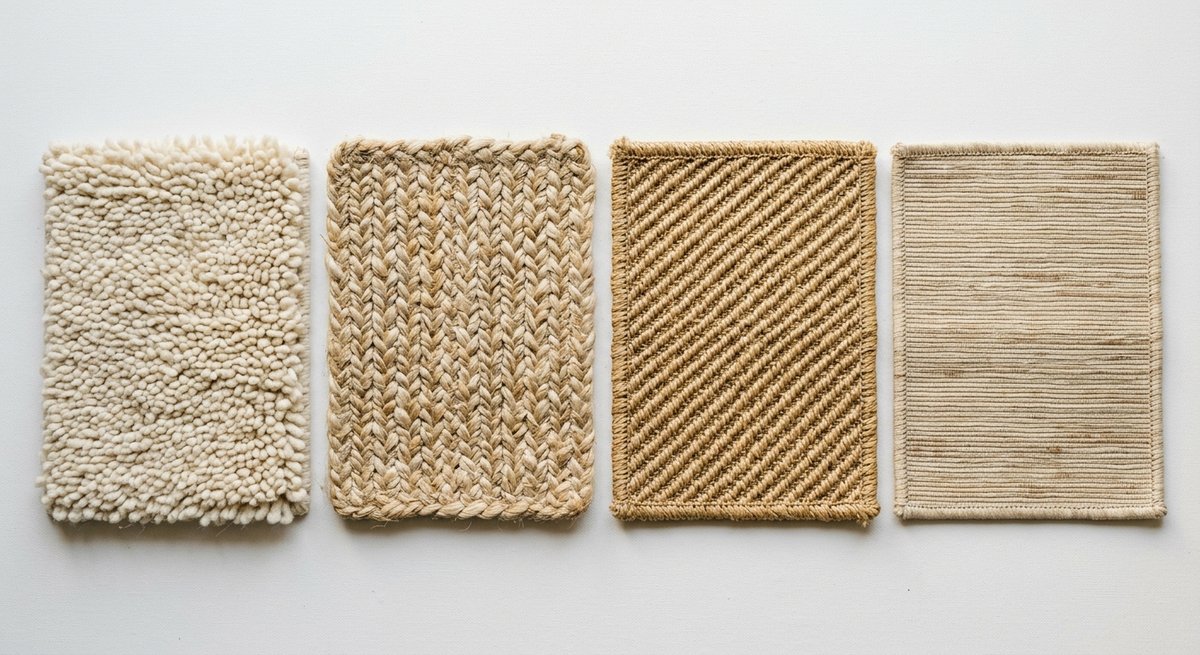
The material of your rug affects everything — how it feels underfoot, how long it lasts, how easy it is to clean, and where it works best. This guide breaks down the most popular rug materials so you can choose the right one for your home.
Wool Rugs
Wool is the gold standard for rug materials. It's natural, durable, and naturally stain-resistant thanks to lanolin in the fibers.
Advantages
- Exceptionally durable — lasts 10-20+ years with proper care
- Naturally stain-resistant and soil-repellent
- Soft and warm underfoot
- Naturally flame-resistant
- Holds dye well, available in rich colors
- Good insulation — keeps rooms warm
Best For
Living rooms, bedrooms, and high-traffic areas. Wool Berber carpets are particularly good for hallways and stairs due to their tight, looped construction.
Jute Rugs
Jute is a natural plant fiber known for its soft, chunky texture and earthy appearance. It's one of the most affordable natural fiber options.
Advantages
- Soft and comfortable underfoot
- Eco-friendly and biodegradable
- Affordable compared to wool
- Available in natural earth tones
- Adds warmth and texture to any room
Best For
Bedrooms, living rooms, and low-traffic areas. Jute is softer than sisal but less durable, so avoid high-traffic hallways.
Sisal Rugs
Sisal is extracted from the agave plant. It's one of the most durable natural fibers available, making it ideal for high-traffic areas.
Advantages
- Extremely durable — outlasts most other natural fibers
- Static-free and fire-resistant
- Textured surface hides dirt and wear
- Available in natural tones and dyed colors
- Eco-friendly and sustainable
Best For
Hallways, entryways, stairs, and high-traffic living areas. Sisal's tight weave handles foot traffic better than jute or bamboo.
Bamboo Fiber Rugs
Bamboo fiber rugs offer a smooth, low-profile surface with natural moisture-wicking properties. They're a modern alternative to traditional natural fibers.
Advantages
- Naturally moisture-wicking and odor-resistant
- Low-profile design works under doors
- Non-slip textured surface
- Sustainable and fast-growing resource
- Resists shedding
Best For
Kitchens, bathrooms, entryways, and areas where moisture is a concern. The low pile height works well under furniture and doors.
Synthetic Fiber Rugs
Synthetic rugs (nylon, polyester, polypropylene) are manufactured to mimic natural fibers at a lower cost.
Advantages
- Most affordable option
- Highly stain-resistant
- Available in virtually any color and pattern
- Easy to clean — many are machine-washable
- Resistant to fading and moisture
Best For
Kitchens, children's rooms, outdoor spaces, and budget-conscious projects. Synthetic rugs are practical for areas where spills are likely.
Material Comparison
- Durability: Sisal > Wool > Bamboo > Synthetic > Jute
- Softness: Wool > Jute > Synthetic > Bamboo > Sisal
- Stain resistance: Synthetic > Wool > Bamboo > Sisal > Jute
- Eco-friendliness: Bamboo > Sisal > Jute > Wool > Synthetic
- Price (high to low): Wool > Sisal > Bamboo > Jute > Synthetic
Conclusion
There's no single best rug material — the right choice depends on your room, lifestyle, and budget. For durability and comfort, wool is hard to beat. For eco-conscious buyers, sisal and bamboo offer sustainable options. For budget and stain resistance, synthetic is practical. Consider where the rug will go, how much traffic it will receive, and what feel you want underfoot. The right material makes all the difference.