A well-styled rug does more than cover the floor — it ties a room together, defines the space, and sets the tone for your entire interior. Whether your style is modern, traditional, or somewhere in between, these principles will help you style your rug for a look that's both contemporary and timeless.
Start with Furniture Placement
Before choosing a rug, determine your furniture layout. The rug should work with your furniture arrangement, not against it.
The Anchoring Principle
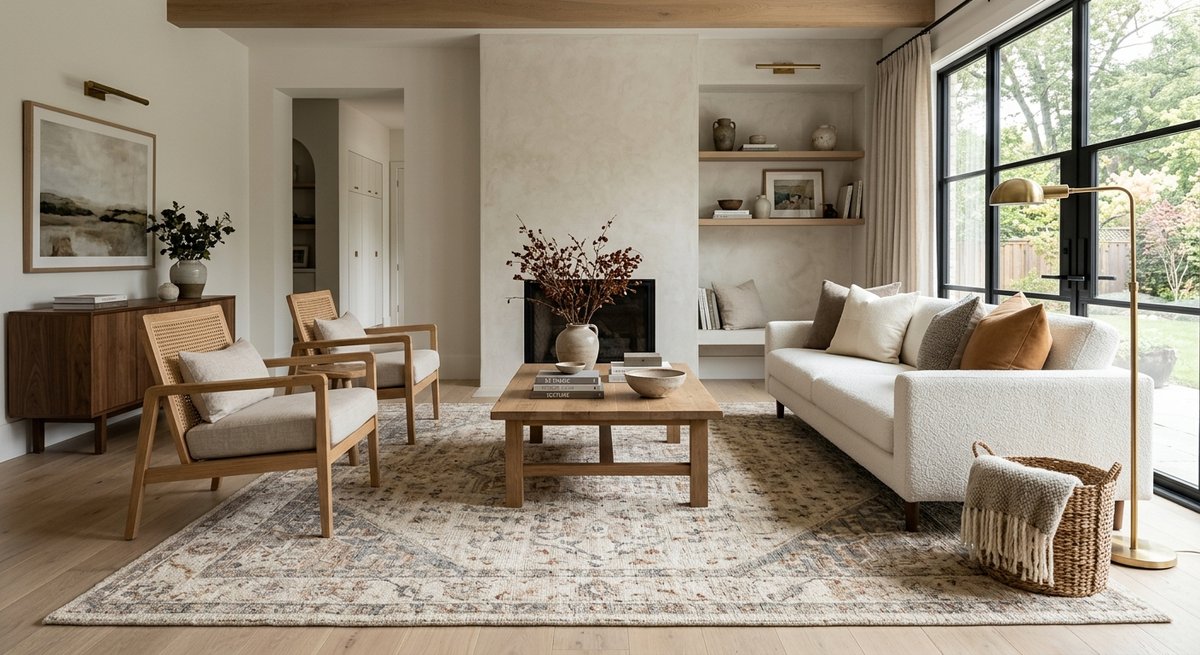
Think of your rug as an anchor for your furniture grouping. All key pieces in a conversation area should connect to the rug — either with front legs on it or fully on it. This creates a sense of cohesion and purpose.
Common Layouts
- Sofa against the wall: Place the rug so the front legs of the sofa and all chairs rest on it
- Floating furniture: Center the rug under the entire furniture grouping
- L-shaped sectional: Use a large rectangular rug that accommodates the full L shape
- Dining area: Ensure the rug extends 24 inches beyond the table on all sides
Color Coordination
Your rug's color should complement — not compete with — your furniture, walls, and decor.
Neutral Foundation
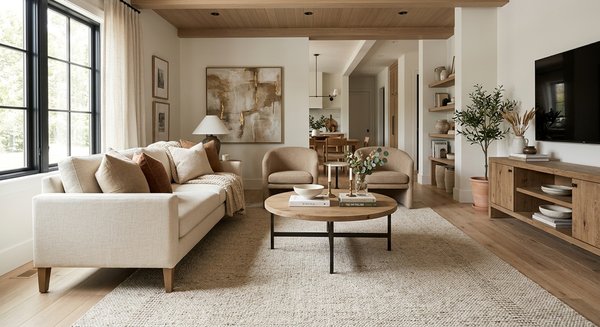
A neutral rug (beige, gray, ivory, natural fiber tones) provides a versatile foundation that works with any color scheme. It lets your furniture and accessories take center stage while the rug quietly grounds the space.
Statement Rug
A patterned or boldly colored rug can serve as the room's focal point. If you choose a statement rug, keep furniture and walls more subdued to avoid visual competition. The rug should be the star, not part of an overwhelming ensemble.
Color Tips
- Pull one accent color from the rug and repeat it in pillows, art, or accessories
- Match the rug's undertone to your wall color — warm with warm, cool with cool
- In small rooms, choose a rug color close to the floor color to create visual continuity
- Dark rugs add drama and coziness; light rugs make rooms feel larger and airier
Texture and Layering
Texture adds depth and interest to a room. Your rug's texture should complement — not clash with — surrounding textures.
Texture Pairing
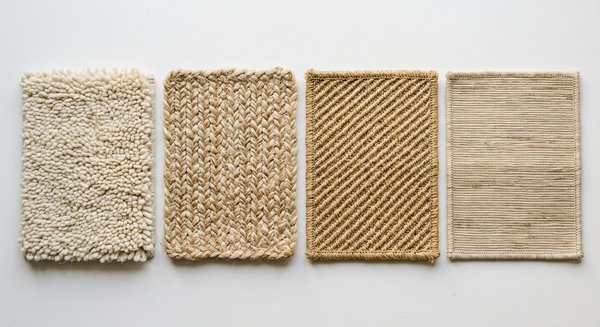
- Smooth surfaces (leather, glass): Pair with textured rugs like Berber, sisal, or jute for contrast
- Textured furniture (boucle, linen): Pair with smoother rugs like low-pile wool or bamboo fiber
- Mixed textures: A flat-weave rug over a textured carpet adds visual interest without bulk
Layering Rugs
Layering a smaller, patterned rug over a larger, natural fiber rug is a popular styling technique. It adds depth and allows you to incorporate pattern without overwhelming the space. Use a large sisal or jute rug as the base, then place a smaller wool or synthetic rug on top.
Room Proportions
The rug should be proportional to the room. A common mistake is choosing a rug that's too small — it makes the room feel disjointed and the furniture look like it's floating.
The 70% Rule
Aim for the rug to cover approximately 70% of the floor area where your furniture sits. This leaves enough bare floor to frame the rug while providing sufficient coverage to anchor the space.
Balance Tips
- In large rooms, use multiple rugs to define different zones (seating area, reading nook)
- In small rooms, a single rug that covers most of the floor creates a cohesive look
- Avoid rugs that touch all four walls — it looks like wall-to-wall carpeting, not an area rug
- Round rugs work well under round tables and in square rooms
Creating a Timeless Look
Trends come and go, but certain styling principles create interiors that look good for decades.
- Choose natural materials: Wool, jute, sisal, and bamboo never go out of style
- Stick to neutral tones: Beige, gray, ivory, and natural fiber colors age gracefully
- Invest in quality: A well-made rug lasts decades and looks better with age
- Avoid trendy patterns: Classic geometric and solid designs outlast bold trend-driven patterns
- Layer with intention: Each layer should serve a purpose, not just add visual noise
Conclusion
Styling a rug is about creating harmony between your floor, furniture, and overall design. Start with proper furniture placement, choose colors that complement your space, add texture for depth, and maintain proper proportions. When you follow these principles, your rug becomes more than a floor covering — it becomes the foundation of a beautiful, timeless interior.